

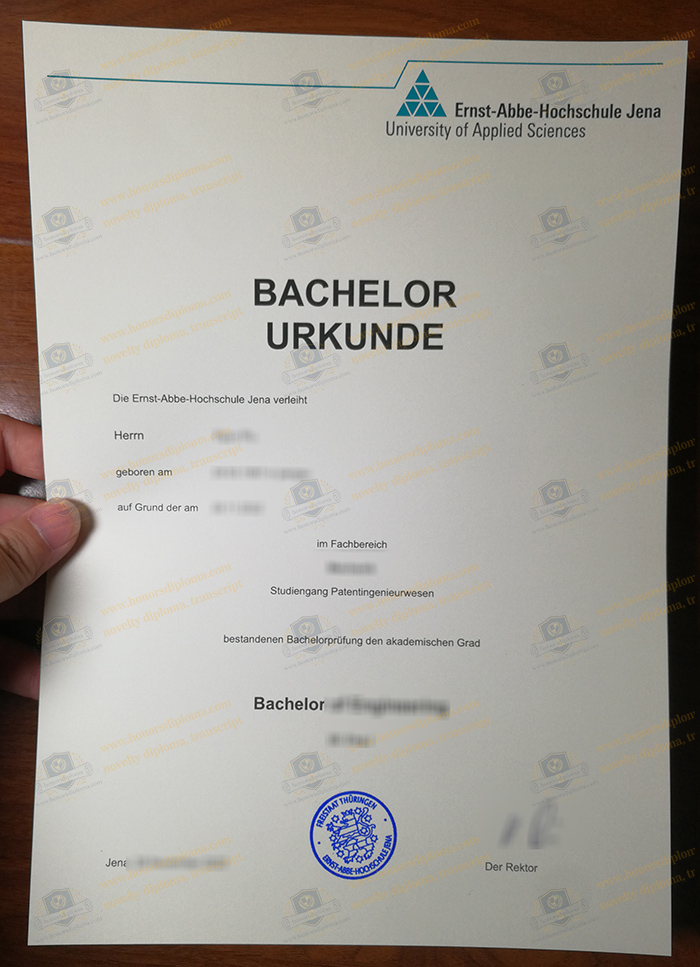
Ernst-Abbe-Hochschule Jena Diploma: A Practical Guide for Students and Graduates
Ernst-Abbe-Hochschule Jena is a public University of Applied Sciences located in Jena, Germany. Furthermore, it carries the name of Ernst Abbe, the renowned physicist and entrepreneur who helped shape Jena as a center of optics and precision engineering. Today the university awards official academic degrees that employers across Germany and the European Higher Education Area recognize. Therefore, this guide explains what an Ernst-Abbe-Hochschule Jena diploma covers, who it serves, and how it supports both further study and employment.
What Degrees Does Ernst-Abbe-Hochschule Jena Offer
Following the Bologna reform, the university replaced its traditional German Diplom degrees with Bachelor and Master programs. Specifically, it now awards Bachelor of Arts, Bachelor of Science, Bachelor of Engineering, Master of Arts, Master of Science, and Master of Engineering degrees. Moreover, each program follows the European Credit Transfer and Accumulation System, also known as ECTS. In practice, a typical Bachelor program takes six to seven semesters, and a Master program takes three to four semesters.
Subject Areas and Program Options
The university organizes its study programs across several departments. For instance, the Faculty of Business and Industrial Engineering offers degrees in business administration, business information systems, e-commerce, industrial engineering, and environmental engineering. In addition, the Faculty of SciTec covers applied materials science, laser and optotechnologies, precision agriculture, and scientific instrumentation. Meanwhile, the Faculty of Social Work provides programs in social work, civic education, and game and media pedagogy. Furthermore, the Faculty of Health Sciences covers nursing science, physiotherapy, medical engineering, and public health. Notably, selected Master programs such as Scientific Instrumentation and Pharmaceutical Biotechnology teach all or part of their content in English, so international applicants can access them directly.
Why the Diploma Matters for Job Seekers
Graduates holding an Ernst-Abbe-Hochschule Jena diploma benefit from the university applied teaching model. Specifically, programs combine classroom theory with practical semesters, laboratory work, and industry projects. Moreover, Jena hosts a strong network of companies in optics, photonics, biotechnology, and software engineering. As a result, local employers frequently recruit from the university because the school trains graduates for direct entry into professional roles. In addition, the degree carries the German University of Applied Sciences label, which employers value for its hands-on orientation. Consequently, many alumni move into engineering, business management, healthcare, social services, and research and development positions across Germany and abroad.
Further Study After Graduation
An Ernst-Abbe-Hochschule Jena Bachelor diploma qualifies holders to apply for consecutive Master programs at universities of applied sciences and research universities in Germany. Furthermore, the university itself offers several Master degrees, so graduates can deepen their expertise without leaving Jena. For students considering a doctorate, a strong Master grade opens the path to collaborative doctoral projects with nearby research institutions. In addition, the university issues a diploma supplement with every degree. This document describes courses, grades, and skills in a standardized format, which helps applicants show credentials to universities and employers outside Germany.
Who Should Apply
Prospective students who prefer practice based learning will find a good fit at Ernst-Abbe-Hochschule Jena. Meanwhile, current students should use the practical semester and project phases to build professional contacts before graduation. Finally, job seeking graduates should highlight applied projects, internships, and language skills on their applications. Overall, the Ernst-Abbe-Hochschule Jena diploma remains a recognized credential that supports entry into the German job market and continued academic development.