

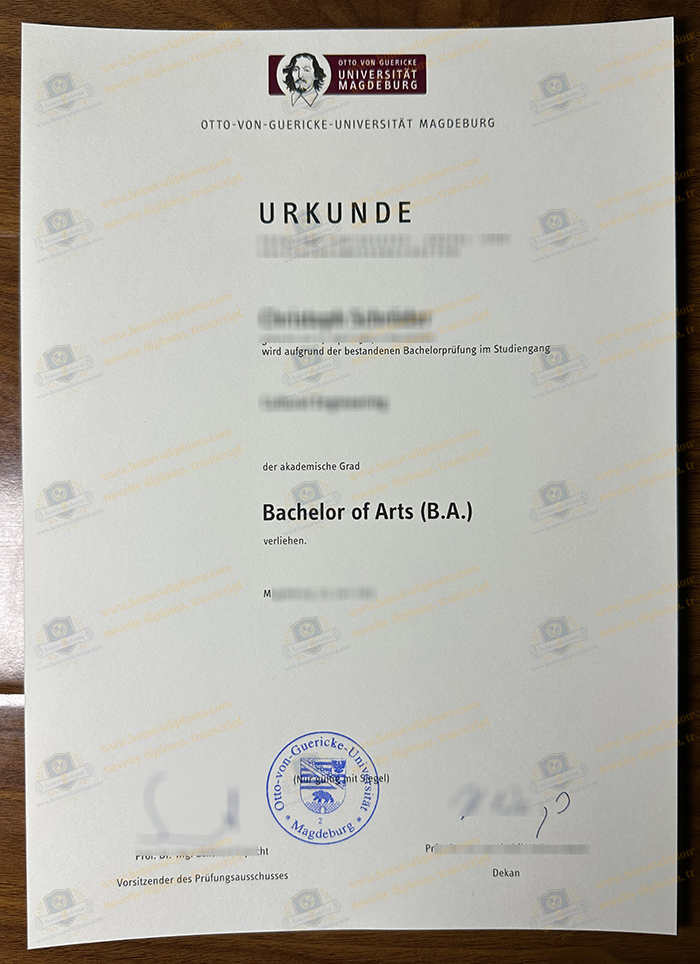
The Value of an Otto-von-Guericke-Universität Magdeburg Diploma
Otto-von-Guericke-Universität Magdeburg is one of Germany youngest public research universities. It sits in Magdeburg, the capital of Saxony-Anhalt. Founded in 1993, it unites engineering, medicine, and the humanities under one roof. An Otto-von-Guericke-Universität Magdeburg diploma carries full research university status.
A Young Research University
The school opened in 1993 through a merger. It combined a technical university, a teacher training college, and a medical academy. It now hosts nine faculties and roughly 14,000 students. Around 3,000 of them come from abroad. Tuition remains low for most programs. Students pay a small semester fee. The campus spreads across several sites in the city. It is named after Otto von Guericke, the 17th-century scientist and former mayor of Magdeburg known for his vacuum experiments.
Nine Faculties, Broad Reach
The faculties cover humanities, social sciences, and education, mathematics, computer science, mechanical engineering, process engineering, electrical engineering, natural sciences, medicine, and economics. This breadth lets students combine technical study with business or health training. The medical faculty runs its own university hospital. Students switch fields across departments more easily than at narrower schools. Smaller class sizes support early contact with professors.
English Master Tracks
About 22 programs teach in English. Most sit at Master level. Examples include Data and Knowledge Engineering, Digital Engineering, Operations Research and Business Analytics, Integrative Neuroscience, and Immunology. These tracks draw international cohorts. Application deadlines fall around May for the winter intake. Bachelor programs still mostly run in German.
Research Strengths
The university partners with nearby non-university research institutes. Research clusters focus on complex systems, neuroscience, biomedical engineering, and data science. Doctoral students join structured research programs. This research depth distinguishes it from applied sciences universities. Labs and centers collaborate across faculty lines. Several shared projects run with neighboring research institutes.
State Recognition Across Europe
As a public research university, the degree carries full German state recognition. It qualifies graduates for doctoral study anywhere in Germany. ECTS credits transfer across the EU. The diploma is widely accepted by employers and graduate schools abroad. Accreditation follows national quality rules. Credential evaluations abroad recognize it as a German research degree.
Career Paths for Graduates
Alumni enter engineering firms, hospitals, research institutes, banks, and public administration. The strong medical pipeline feeds the regional health system. Engineering and computer science graduates move into automotive, logistics, and tech firms in central Germany. Starting salaries in engineering and medicine match national averages. The Otto-von-Guericke-Universität Magdeburg diploma also prepares students for PhD positions. Many alumni stay in Saxony-Anhalt or move on to Berlin and Munich.
Is It the Right Pick
The degree suits students who want research depth alongside practical training. It fits future engineers, doctors, economists, and data specialists. It rewards at least basic German, though English Master tracks exist. Living costs in Magdeburg stay below those in large German cities. For a modern, affordable public research degree in central Germany, it remains a strong choice.