

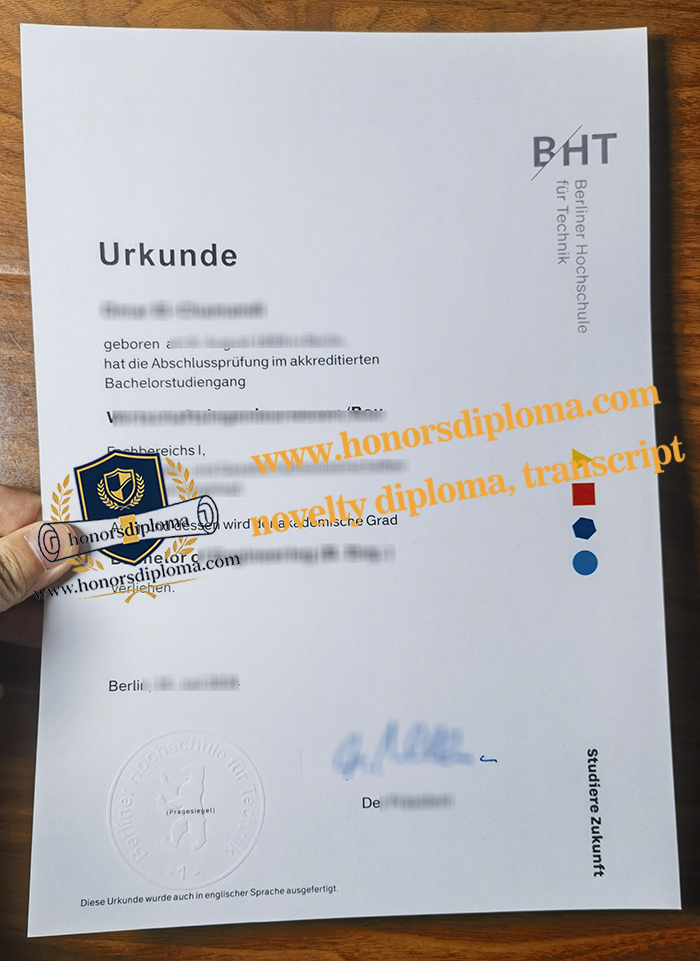
Berliner Hochschule für Technik Diploma: A 2026 Career Guide for Engineers and Graduates
The Berliner Hochschule für Technik diploma is a state-recognized engineering and technology degree. It comes from one of Germany’s largest public universities of applied sciences. The school focuses on engineering, computer science, the built environment and life sciences. For international students, job seekers and graduates, it signals hands-on technical competence and strong employability. This guide explains what the diploma covers, how employers value it, and what to expect after graduation.
What Is Berliner Hochschule für Technik?
Berliner Hochschule für Technik (BHT) is a public University of Applied Sciences in central Berlin. It was founded in 1971 as the Technische Fachhochschule Berlin (TFH). It merged four older state engineering academies. From 2009 to 2021 it was called Beuth Hochschule für Technik. It took its current name on 1 October 2021. Today it enrolls more than 12,000 students. Its roots stretch back to the early 19th century. As a public institution, it charges no general tuition fees. Students pay only a low semester contribution, which includes a Berlin transport pass.
What Diploma Types Does BHT Award?
BHT awards Bachelor and Master degrees across engineering, computer science and related fields. Common qualifications include:
– B.Eng. Electrical Engineering — a seven-semester, 210 ECTS German-taught degree.
– B.Eng. Mechanical Engineering — a practice-oriented German-taught bachelor’s programme.
– M.Eng. Mechanical Engineering — a three-semester, 90 ECTS German-taught master’s.
– M.Sc. Data Science — an English-taught master’s focused on machine learning and analytics.
– M.Eng. Information and Communications Engineering — a three-semester, 90 ECTS English-taught master’s.
All programmes are accredited under German and European quality assurance rules. Some courses offer double degrees with partner universities such as Tongji University in Shanghai.
How Do Employers Recognize the BHT Diploma?
BHT is a publicly funded, state-recognized German institution. Its diplomas are recognized across the European Higher Education Area under the Bologna framework. ECTS credits transfer freely to other European universities. Graduates can apply for nostrification in most non-EU countries through local education authorities.
Because BHT is a University of Applied Sciences, its degrees are practice-oriented. Curricula include mandatory industry internships and project work. Berlin’s strong technology sector actively recruits BHT graduates. Major employers include Siemens, Deutsche Bahn, Bosch and many Berlin startups. The university’s applied focus means graduates are job-ready by graduation.
English-Taught Programs for International Students
Most BHT programmes are taught in German. However, several master’s degrees are fully in English. The M.Sc. Data Science covers statistics, software engineering, machine learning and ethics. The M.Eng. Information and Communications Engineering runs over three semesters with 90 ECTS. A new B.Eng. Data Engineering bachelor’s starts in English from the 2026/27 winter semester.
Career Outlook for Graduates
BHT graduates work in mechanical, electrical and civil engineering, IT, data science, energy, construction and optics. Berlin’s dense ecosystem of tech firms, research institutes and public utilities keeps demand high. International graduates with a recognized German degree qualify for an 18-month job-seeking residence permit. This permit is offered by Germany to non-EU graduates.
Final Thoughts
A Berliner Hochschule für Technik diploma combines engineering tradition with Berlin’s tech scene. It is practice-oriented, internationally recognized and tuition-free. For students and employers alike, it remains a credible path into German and European engineering careers.