

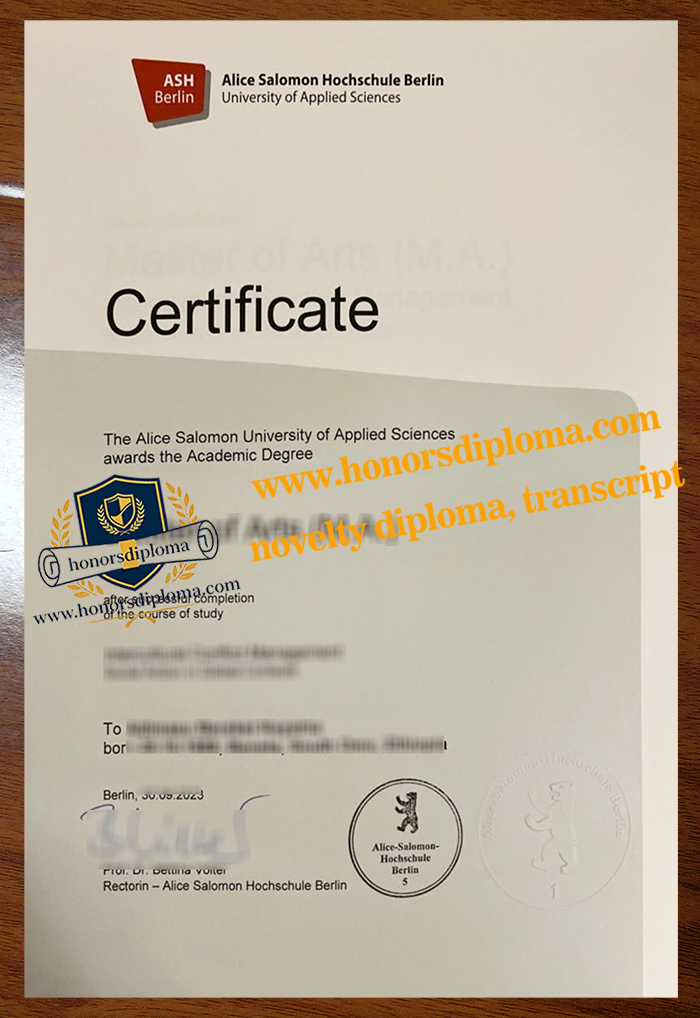
Hochschule Berlin Diploma: A 2026 Career Guide for Students and Graduates
The Alice Salomon Hochschule Berlin diploma is a state-recognized qualification. It comes from one of Germany’s most respected public universities of applied sciences. The school focuses on social work, health sciences, early childhood education and social management. For international students, job seekers and recent graduates, it signals practical competence and Bologna-compliant ECTS credits. It also opens access to the German and European social and health labour markets. This guide explains what the diploma covers, how employers value it, and what to expect after graduation.
What Is the Institution Behind the Diploma?
Alice Salomon Hochschule Berlin (ASH Berlin) traces its roots to 1908. That year, feminist social reformer Alice Salomon founded Berlin’s first formal training school for women in social work. It became a state higher-education institution in 1971. Today it enrolls roughly 3,200 students at its Hellersdorf campus. As a public University of Applied Sciences, it charges no general tuition fees. Students only pay a low semester contribution that includes a Berlin transport pass.
Which Diploma Types Does ASH Berlin Award?
The university grants Bachelor of Arts (B.A.) and Master of Arts (M.A.) degrees across its four core faculties. The most sought-after qualifications include:
– B.A. Social Work — an eight-semester, German-taught programme. It normally leads to state recognition as a social worker in Germany.
– M.A. Social Work as a Human Rights Profession (MA-SWHR) — a four-semester, 120 ECTS English-taught master’s. It runs in partnership with universities in Sweden, Slovenia and beyond, and is accredited by AQAS until 2029.
– M.A. Clinical Social Work — a six-semester, part-time and career-integrating programme for already qualified practitioners.
– M.A. Intercultural Conflict Management — an English- and Spanish-taught degree aimed at international fieldwork.
How Do Employers Recognize the ASH Berlin Diploma?
ASH Berlin is a publicly funded, state-recognized German higher-education institution. Its diplomas are automatically recognized across the European Higher Education Area under the Bologna framework. ECTS credits transfer freely to other European universities. Graduates can apply for nostrification in most non-EU countries through local education authorities.
For roles in social work, youth welfare, child protection, clinical counselling and health management, the B.A. carries special weight. The German system commonly awards state recognition (staatliche Anerkennung) together with this bachelor’s diploma. This recognition is the legal licence to practise as a social worker in Germany.
The English-taught master’s degrees target international careers with NGOs, development agencies and human-rights organizations. They do not focus on the German regulated profession. Berlin’s large non-profit and public-sector network actively recruits from ASH Berlin. Employers value the university’s long-standing practice-oriented curriculum and mandatory internships.
Career Outlook for Graduates
ASH Berlin graduates work across social services, hospitals, youth welfare, migration support, early childhood education, social management and international NGOs. Berlin’s dense network of public welfare providers and charities makes entry into the field smooth. International graduates with a recognized German degree also qualify for an 18-month job-seeking residence permit. This permit is offered to non-EU graduates by Germany.
Final Thoughts
An Alice Salomon Hochschule Berlin diploma combines more than a century of social-work heritage with tuition-free public education. It also carries strong employer recognition. For students aiming at a meaningful career in social, health or human-rights professions, it is a strong credential. It also appeals to employers who need practice-ready graduates.